

A Hands-On Lesson on Conservancy Work
On 26 March, two classes of Primary 6 students from River Valley Primary School found out first-hand what it takes to keep a neighbourhood in tip-top shape.
Green Town -
09/04/2026
Share to:


https://enewsletter.tptc.org.sg/a-hands-on-lesson-on-conservancy-work/
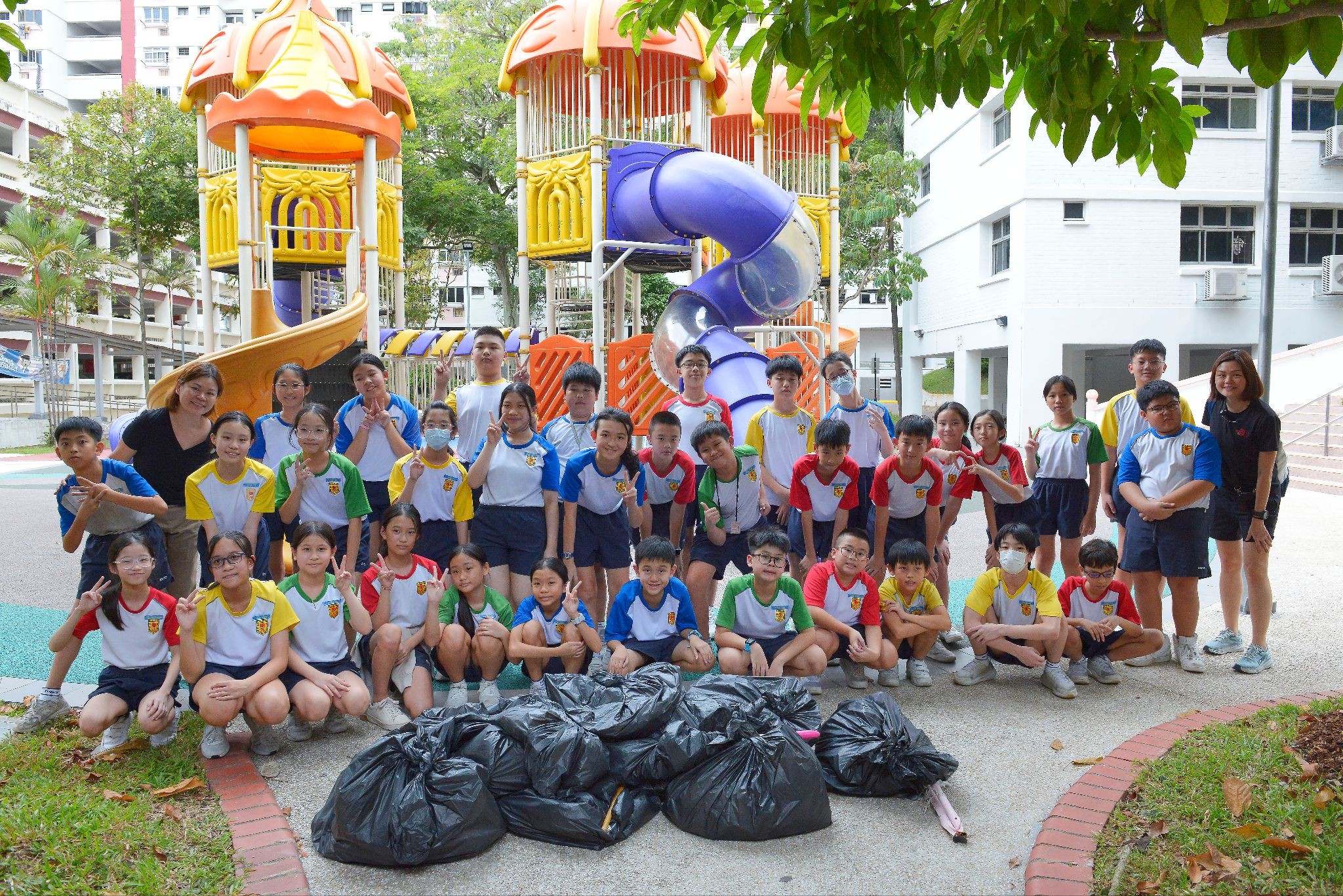
How much trash can accumulate in one day?
Two classes of primary students found out for themselves: 10+ bags.
This is the third year of a collaboration between Tanjong Pagar Town Council (TPTC) and River Valley Primary School (RVPS) which gave students the chance to learn about estate maintenance and get their hands dirty doing some of the work.
Maintaining the estate
Gathered in the Multi-Purpose Hall (MPH) at Block 125A, Bukit Merah View, the RVPS students got to chat with TPTC’s property officers and conservancy workers to understand what it takes to keep their neighbourhood pristine.
For many, it was their first time hearing about the OneService app. Property officer Jun Yang opened their minds (and their app stores) to this direct line between residents and their Town Councils. A student participant, Olivia, would later remark that “it was [her] first time learning about the [OneService] app.”
For those unfamiliar with what OneService can do, Jun Yang explained that you can report maintenance issues, request assistance and even book facilities. Requests and reports reach Town Council property teams, who then swiftly dispatch conservancy staff or contractors to rectify issues, or follow up personally to render assistance.
If you’re around @OurTanjongPagar and see conservancy workers bustling about in their distinctive red polos, they’re either engaged in their scheduled cleaning duties or responding to resident feedback. They work from morning till night, and are on standby around the clock to address urgent requests.
For this engagement, we invited two of these red-shirted heroes, Tofad and Arafat, to speak about their experiences and answer any of the students’ burning questions about their job.
When do they start work? 6:30 a.m.
When do they end? 10 p.m.
What time do they have lunch? Lunchtimes are staggered so that there are always people on hand to respond to any situation.
What is the hardest part of the job? Clearing rubbish chutes—the work requires two men to load trash weighing 50-80kg into carts to be cleared.

Tofad and Arafat were good-humoured about their demanding job. When asked if they found it tiring, Tofad mused that all work is tiring, even studying. Behind all that good humour is a healthy pride for their work. They know how hard they work, and how much it benefits the neighbourhoods.
Beautifying the estate
In addition to our red-shirted conservancy team, our horticulture team in striking lime green were also on hand to explain their work to students.

There are three horticulture teams. In simple terms they are: tree pruning, grass cutting, and landscape maintenance. Together, they care for every tree, flower bush and blade of grass in the neighbourhood.
The tree pruning team knew how to catch the children’s attention. As part of their presentation, they brought a mobile woodchipper. Introduced to Tanjong Pagar around 3-4 years ago at the suggestion of NParks, they are used by the Town Council horticulture team to turn pruned branches into mulch for trees in the neighbourhood.
With a satisfying racket and a storm of leaf bits, the woodchipper quickly reduced a pile of branches into tiny bits of wood. The resulting mulch would be piled at the bases of trees, protecting their roots from damage during grass cutting, and helping them retain moisture. Over time, the mulch decomposes into nutrients for the trees. Walton, another participant, would later say that the presentation helped him “learn about composting”.

Beyond the awesome spectacle it displays, the woodchipper is a practical and environmentally-friendly way to deal with horticultural waste. It cuts out the fuel consumption required to transport plant trimmings to landfills, while creating natural, chemical-free fertiliser that helps keep nature natural.
Much like their colleagues in red, much of the horticulture team’s work revolves around the residents. They look for secluded areas to run the woodchipper, so that the fewest residents are disturbed by the noise, and they don’t run the machine on weekends, allowing residents to get their beauty sleep in.
Trying their hand at some heart work
Armed with the knowledge of what conservancy workers did, and more importantly, tongs and gloves, the students were briefed to pick up litter in the area surrounding the MPH.

The students had actual work cut out for them; the conservancy team had made sure to leave the area untouched for the students to experience the work first-hand.
As Tofad and Arafat watched with pride and amusement while the students swarmed the area with their trashbags, gloves and tongs, they shared more about their lives. They only get one month every two years to see their families. And even that is carefully scheduled to make sure services aren’t disrupted.
It’s a painful compromise, they share. They were clear-eyed about the fact that they came from Bangladesh to Singapore to make money for their families back home, but it meant that they don’t get to see the loved ones that they work so hard for. And it really is hard work. Conservancy workers work 24/7, 365. Tofad joked that whenever someone called, he would be there.
Still, Tofad maintains a soft spot for the neighbourhood he works in. Rather than talking about the pains of the job, as he watched the students run about the area, he shared about how he hoped residents would be more understanding about children making noise as they played. Children will be children, he said, let them have fun.
Spoils of the hunt
After half an hour of tracking down every piece of litter they could, the students returned with their “spoils”. Amongst the most impressive finds were two small wooden chairs, discarded in some void deck.
Though the area looked relatively clean before the students started picking litter, there was still a surprising amount of trash to collect. Trash that Tofad and Arafat helped dispose of once the students had left.
While trash had been what the children brought back to the MPH, the lessons that they bring home with them are far more important.

When asked what they took away from the activity, they had a renewed conviction that “littering is a big problem”, and newfound appreciation of the work conservancy workers and property officers did.
“I learnt that conservancy workers walk up and down the blocks to check for any issues,” one of the students, Leia remarked about their hard work.
We hope that you share this newfound appreciation and respect for the heart work of our conservancy workers in @OurTanjongPagar. To quote Jace, another participant, “remember to say hi when you run into [conservancy workers].”