

What you may not know about the lives of our estate’s cleaners
We spent a day with Dipomkar and his conservancy team to learn more about the people who are so vital to keeping our neighbourhoods clean
Share to:


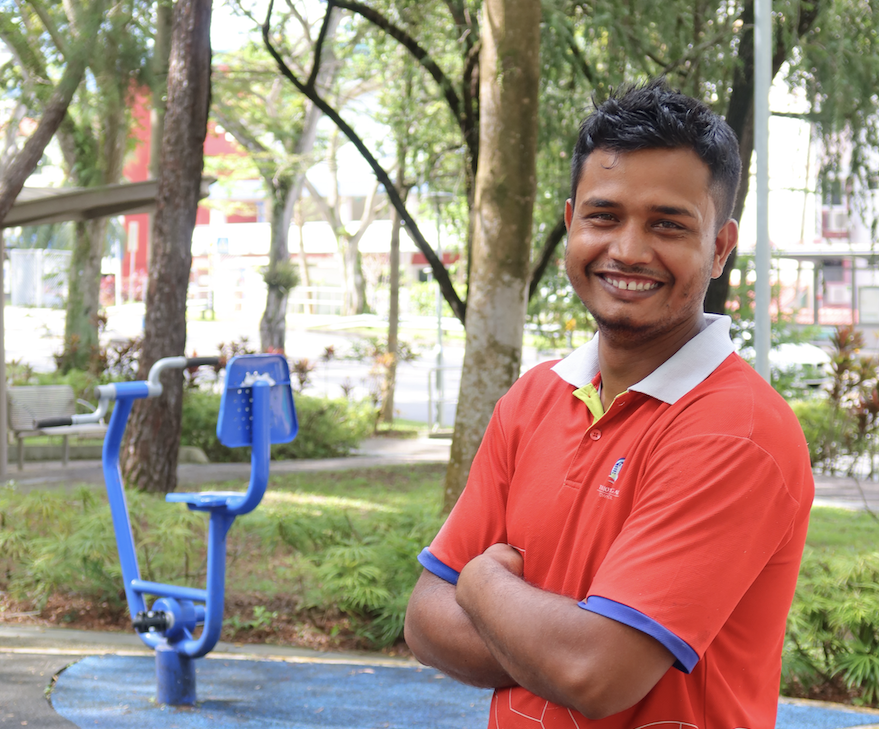
It’s 6am and as always, Dipomkar and team start their shift right on time.
As he gets ready to sweep and mop the ground level, he spots an urgent issue.
An easy fix
There is an obstruction in the trash compactor. He’d have to clear it quickly, otherwise his team wouldn’t be able to discard the rubbish they collect.
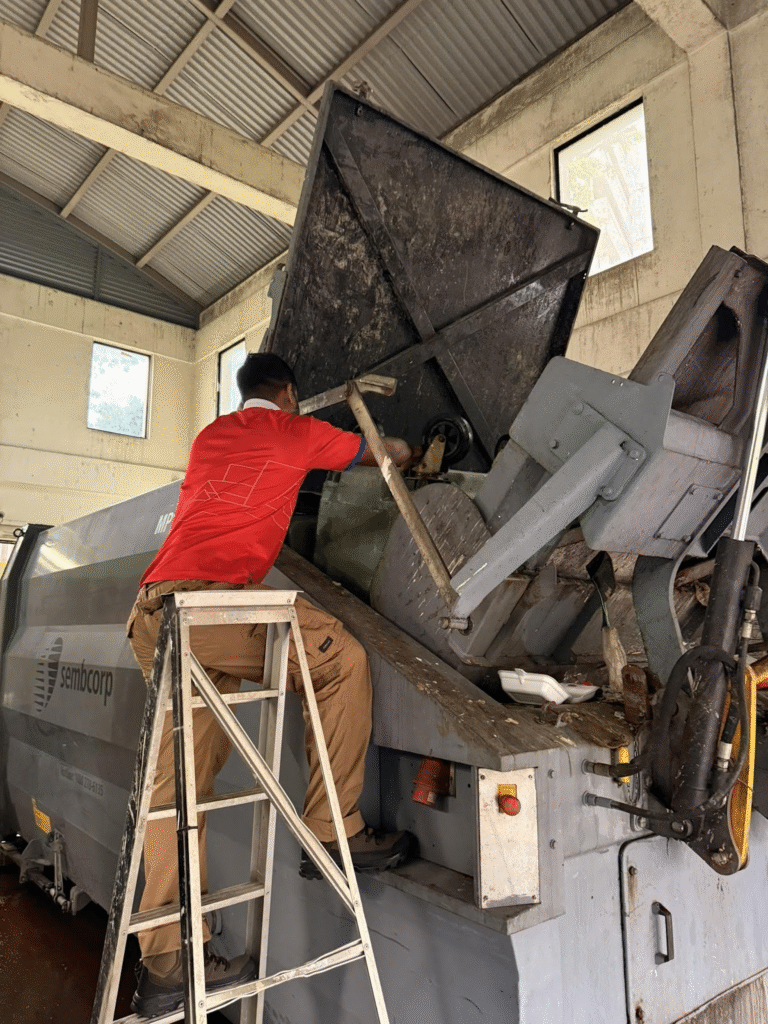
It’s not a big issue, Dipomkar explains. He already has the necessary equipment prepared. But even a muscular man like him cannot do it alone. He calls out to his colleague for help.
Working together with practised efficiency, they quickly cleared the obstruction and got the compactor back to working order.
He returns the ladder and washes his hands. No time for a breather, his next task awaits.
An all-day job
He has 18 blocks to look after. Even with a team of 8 to 9 cleaners under his supervision, it would take them all day.
By 9am, they’re done cleaning the ground floor and immediately move on to the upper floor corridors and staircases. Working steadily, they usually complete this by noon.
After every task, the team has to submit a photo and report on their Facilities Management App, called GOfm. This system enables their supervisors to constantly check that the work is done according to the required standard, and residents always have a clean living environment.
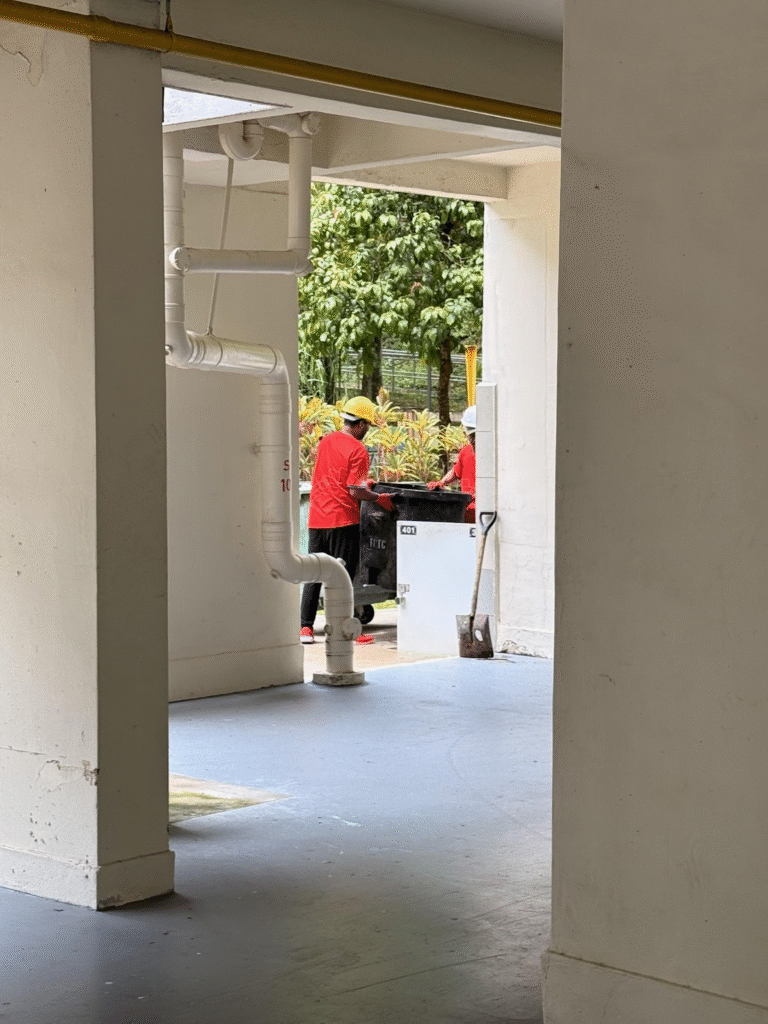
At 1pm, after lunch, it’s time to clear the rubbish chutes at the bottom of each block. This is a priority for Dipomkar – if not cleared daily, the rubbish would pile up and make it difficult to even remove the bins.
7 days a week
That’s why they work seven days a week. On Sundays, they work till 12pm, blitzing through their chute route so that they can have an early rest.
On a weekday like this one, rubbish collection is followed by sweeping of the gardens and turf areas at 3pm, and then a second cleaning of the lift lobbies and void decks from 6pm to 7pm.
With long, physically-demanding hours and no days off, one wonders how much they earn. He quietly says that, with rent and utilities covered, he makes enough to get by, with care.
This means, among other things, shopping at Mustafa for groceries monthly and sharing it with his five flatmates. “There (it’s) cheap, hawker centre no. Here you go out (to) eat, every day twenty, thirty dollars. So every day (we) cook.”
This way, he saves enough support his 1-year-old daughter, wife, and mother back home.
The dreams he keeps
Far from home, Dipomkar holds tightly to thoughts of his family, and his dreams. When he returns home for good, he wants to start a small business, selling the thosai and coffee he enjoys. He emphasises that there’s no need for “big money. Just enough to eat is okay.”
For now, he is content with his life. When we asked him whether Singaporeans can sometimes be difficult and “complain too much”, he shakes his head.
“No, no, they are all very nice. Sometimes they share with me makan (food), sometimes they give me kopi money like one dollar, two dollar, they are all very nice.”
He does his work without complaining. Throughout the day, he’s constantly moving.
Spotting scrap paper along a chair, he picks it up and bins it. He bends down and looks into the drains to ensure they are not too clogged, resulting in mosquito hotspots.
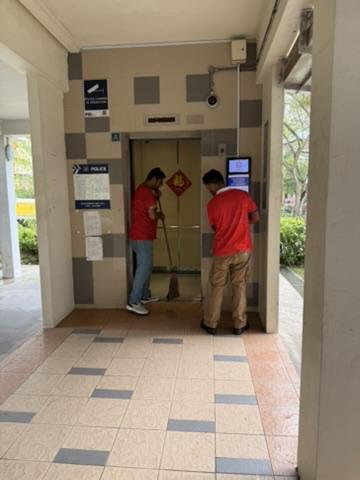
Walking into a lift, his nose wrinkles at a puddle on the floor.
“Do you see?” He points. “Dog urine, with water someone has poured over it.” We look up at the ‘No Urinating’ sign in the lift, down at the puddle, then at each other. We laugh.
He quickly mops the puddle up with a smile. “There, easy. Done.”
What’s difficult?
“Everything easy, residents very nice. Nothing to complain.”
Nothing much to ask for
When asked if he wants to ask anything of residents, Dipomkar shakes his head. “Everyone very nice, nothing to ask.”
What about his teammates? A few of them gently suggested that it would make their work much easier if all residents are mindful about properly bagging and throwing rubbish into bins and bin chutes. Aside from this, they are happy with their jobs.
Close ties to the neighbourhood
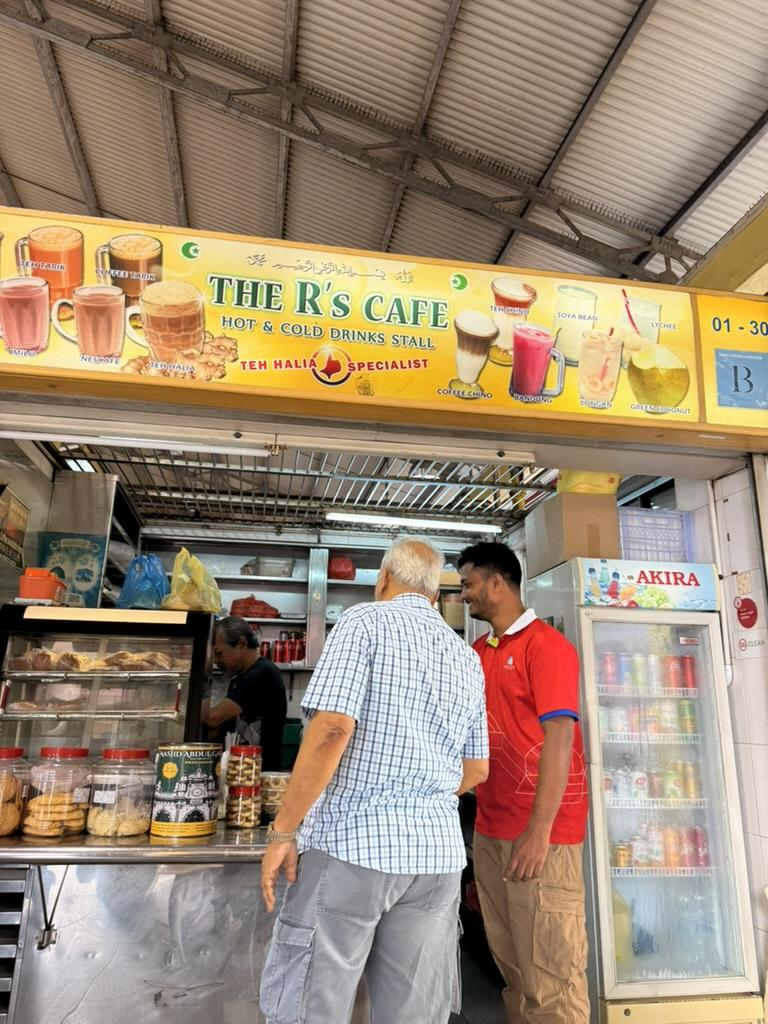
It’s after 7pm now, and we walk home with Dipomkar. As he moves through the blocks, he waves to residents and greets them. He remembers their names, even though they might not remember his. We swing by his regular coffee stall at the hawker centre, where he steps behind the counter and wraps his hand around the shoulders of the owner.
He beams and declares, “This is the best coffee you can find in Singapore.” Despite the seeming difficulties of cleaning, he finds small joys in the simple pleasures of life.
Look on the floors next time you walk home. Is it clean and pristine? Or did an irresponsible person decide that it’s no big deal to just toss their litter on the otherwise spotless surface?
Yes, it’s easy to simply toss and forget. We take for granted that someone will come along and clear it up. After all, that’s what our Town Council fees are for, right?
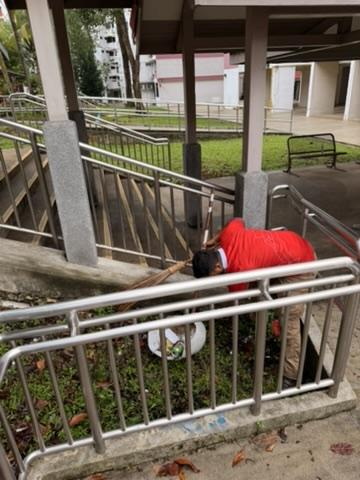
Because of gravity, what we toss always lands somewhere. But we have a choice on how difficult that landing is to clear.
Perhaps we’ll behave better if we keep in mind that the faceless ‘someone’ in our minds is a hardworking individual like Dipomkar. After hours of taxing physical labour, he’ll still need to carefully check every square foot that he’s already cleaned, patiently sweeping up after the less considerate among us.
Sure, he and his colleagues are grateful for the chance to work and live in Singapore. The deeper question is, “Are we? And if we are, how might our actions show our gratitude?”