
Crafting the best art, even if it is to be burnt
While this term may be thrown around a lot these days, especially on social media, Mr Tan and his shop full of paper effigies are truly a hidden gem.
Discovering Our Town -
03/08/2026
Share to:


https://enewsletter.tptc.org.sg/crafting-the-best-art-even-if-it-is-to-be-burnt/
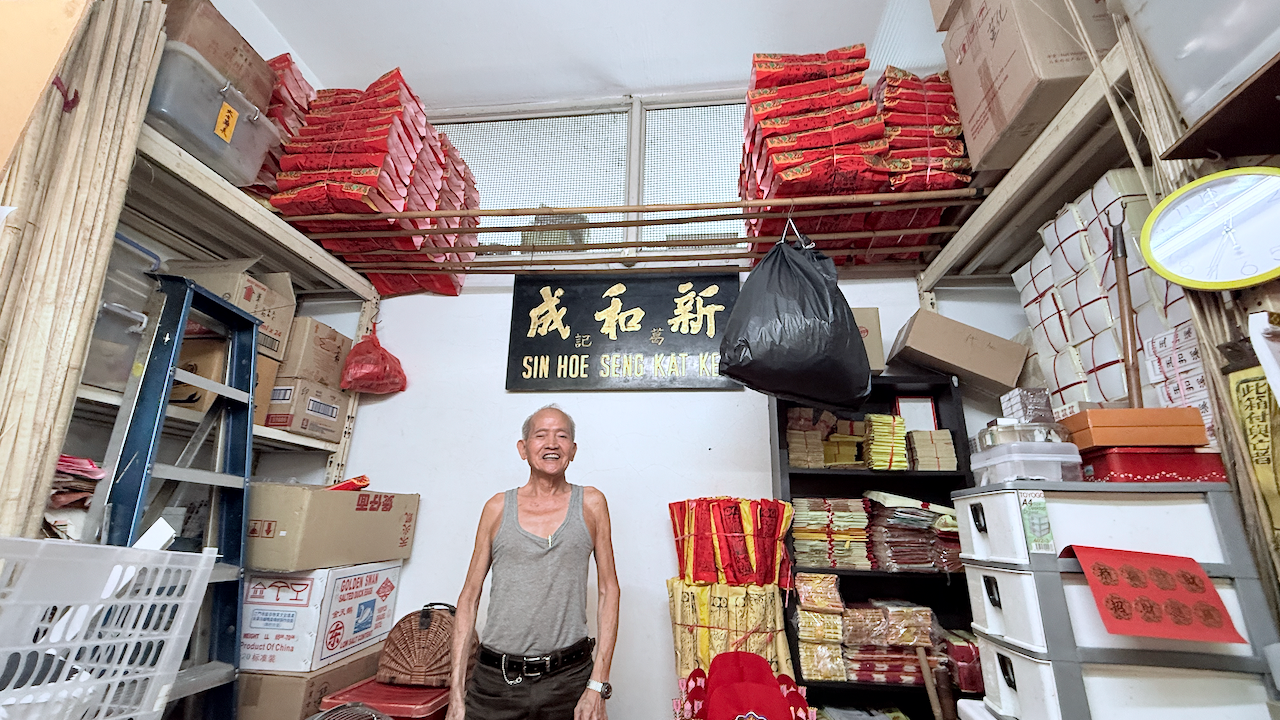
While this term may be thrown around a lot these days, especially on social media, Mr Tan and his shop full of paper effigies are truly a hidden gem. Tucked away on the second floor of the market at Block 112 Jalan Bukit Merah, his stall can be a little tricky to find.
Upon my arrival at Mr Tan’s store at 12.45pm on a Saturday, I was greeted by a closed sign and closed shop shutters. Slightly bewildered, I called Mr Tan, who then explained he only works from 9.00am to 12.30pm. When I met him the next day, I asked how he had sustained a business since the 1980s while operating less than four hours a day.
“Even before the war, my father had started this business. When he retired, my brother took it up. But he couldn’t keep it going.
My brother called me and asked if I would take over our father’s business. At that time, I was travelling to many different countries, but still agreed to come back.
Why? Because I didn’t want my father’s business, painstakingly built over the years, to disappear. In the past, when people asked where to go (for paper effigies), they would say Sin Hoe Seng. But, I knew nothing of making paper effigies. All I knew was that I wanted to keep my father’s business going.
So I came back, started observing, and did what I could. Somehow, I kept the business going. 40 years on, I’m still here.”
A spirit of excellence
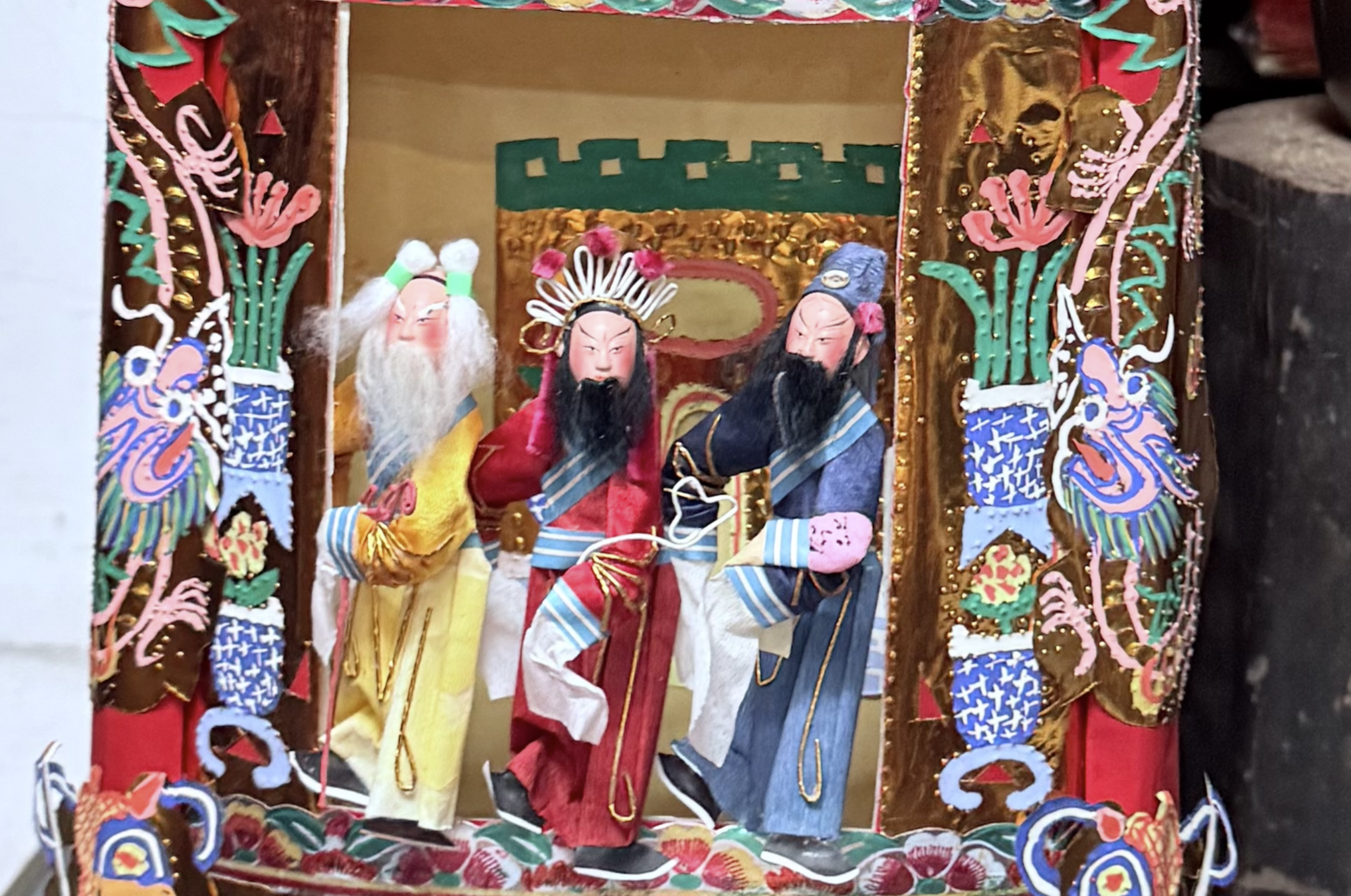
After that short introduction, Mr Tan shuffled over to a cupboard beside his desk, and took out two albums filled with ageing photographs of paper effigies.
“This is what I did in the past. No matter what people asked me to do, I would do it.
When (the customers) told me,
“oh this is very beautiful!” I would say, “If it’s not nice, I wouldn’t dare to
sell it.”
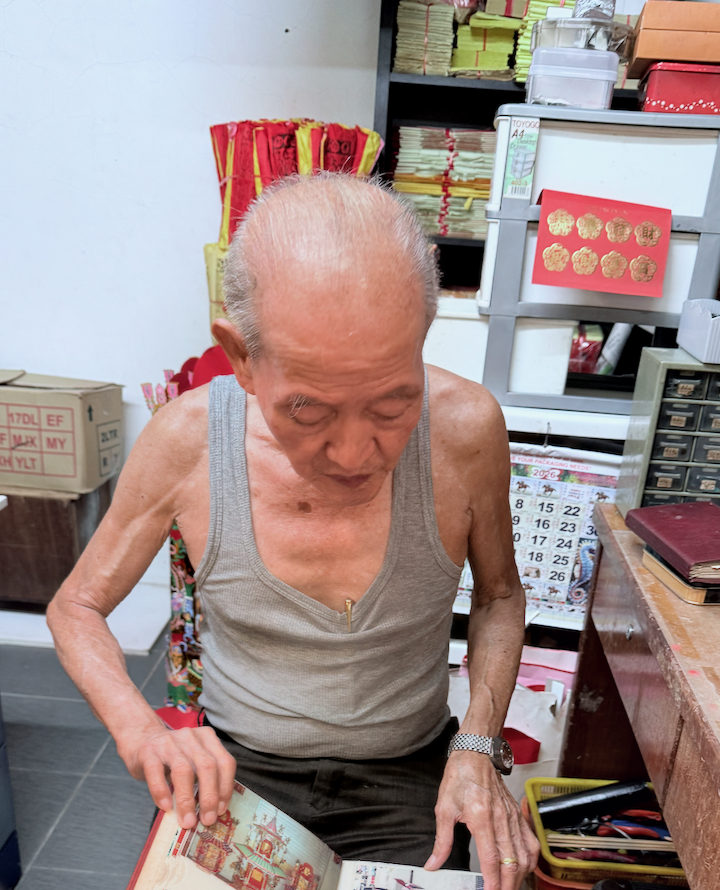
You could very clearly see the spirit of excellence that underlies Mr Tan’s work, excellence that has followed him through four decades in the business. Not once did he complain about high customer expectations, instead showcasing a quiet resolve that strived for perfection. “If you ask me to do it, I will get it done.” This attitude is certainly something current and future generations could learn from, to deliver quality work, regardless of the cost.
After spending some time with Mr Tan, it quickly became clear what the work has cost him. Mr Tan’s hands were visibly gnarled and curled from the decades spent shaping bamboo into figures, and gripping paintbrushes to add delicate details to the faces of deities he painted. Yet when I ask him why he’s not retired yet, he says,
“What’s there to do if I
retire at home?
I might as well do something
useful.”
Clearly, for Mr Tan, this is more than just a job, it’s a mission. He may not have mentioned this while he was speaking to me, but I could easily see that sense of purpose he has. He could easily just do a shoddy job with the painting, since the effigy will get burnt in just a few days. Yet, he draws each mustache and eyebrow with deliberate care. This effort proves that even transient, fleeting work is still worth doing well. Pragmatic people might ask, “It is going to get burnt anyway, so why bother?”
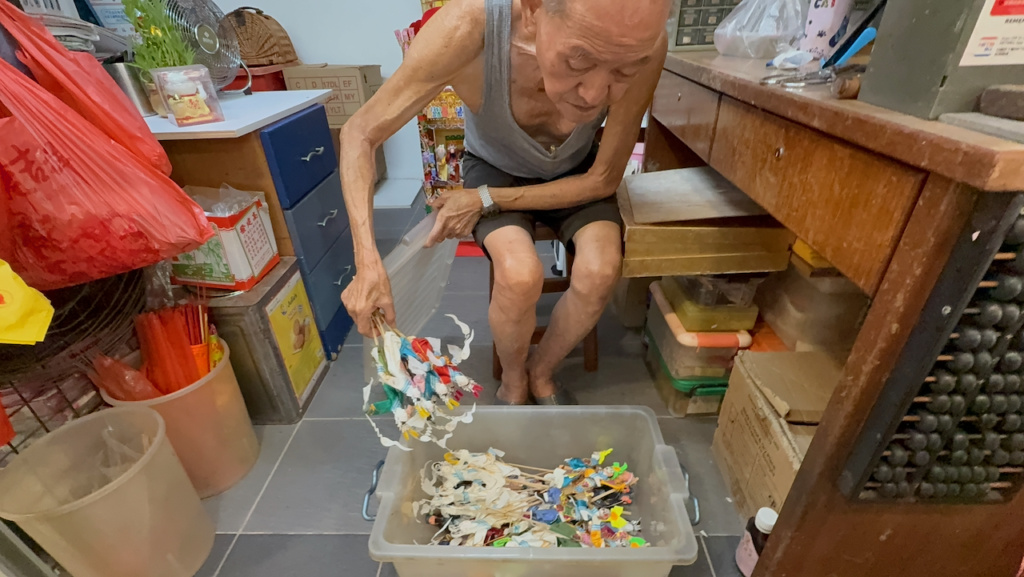
Even if destined for the flames, an intricately designed effigy serves a deeper purpose. Feeling the financial sting of spending hundreds, if not thousands of dollars, on its creation can act as a form of penitence. It becomes a physical outlet for the guilt and regret family members carry for not spending enough time with their loved ones while they are alive.
Crafting peace of mind
Mr Tan does not just sell paper effigies. He sells repentance and peace of mind. He recalled a customer whose deceased grandmother regularly disturbed his dreams with noisy chattering. A consulted priest suggested burning a set of paper dentures to grant the deceased rest. Mr Tan did not question the request. He built the dentures, the family burnt them, and the customer’s nightmares stopped.
By crafting those dentures, Mr Tan did not just fulfil a bizarre order, he provided the tangible tool the grandson needed to silence his subconscious guilt and finally find closure.
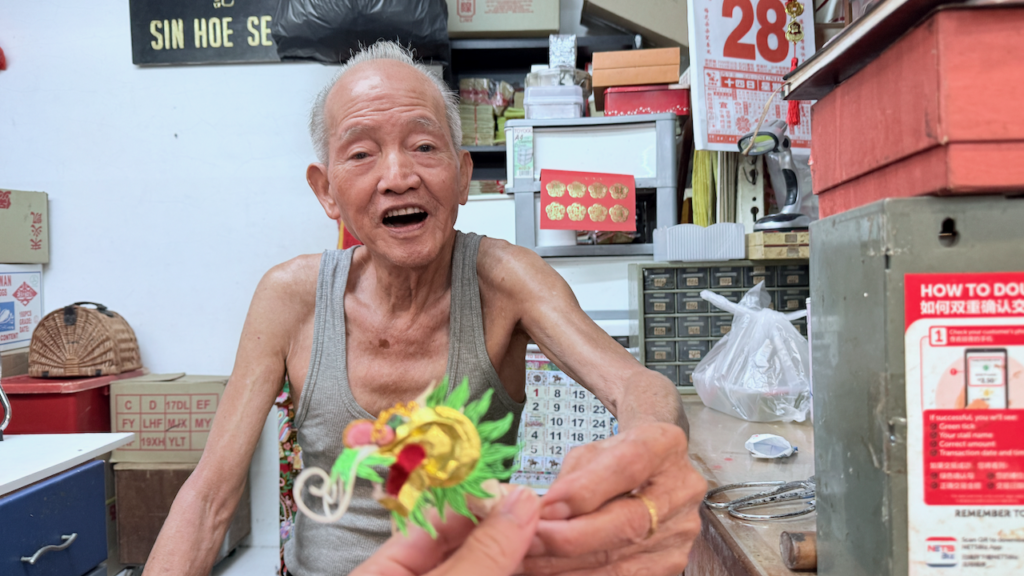
When pressed on his succession and retirement plans, Mr Tan did not seem worried about the nightmarish notion that his craft could disappear, with no one left to take over the business. He seemed resigned to his fate.
“The younger generation doesn’t want to do this. They don’t have the patience. My daughter sees this, and she thinks that it’s too hard.
Do you want to learn how to make this? I will teach you.”
I paused. It was a generous offer, but one that I’m not sure I can steward well.
He read my implicit silence and continued,
“Besides, fewer young people pray to deities these days. Business is hard.”
He takes out a few figurines that he has painstakingly painted recently and says,
“最重要是要看得开。(The most important thing is to learn to let go.)”
As a young man in his twenties, Mr Tan spent his time travelling the world and living a wild, carefree life. But, he had decided to come back and honour his father’s legacy, not letting the business crumble into oblivion.
Even now, he accepts that no one will inherit the legacy he has painstakingly kept alive for more than four decades. He has given his all to the craft. If nothing remains of his business after he goes, he contentedly accepts that it was still a good life.
Mr Tan Ah Seng and his paper effigies could be found in his shop, Sin Hoe Seng, at Block 112’s Jalan Bukit Merah Market, #02-27, Singapore 160112, from Monday to Sundays, 9am to 1pm. You can also call him first at +65 9846 3012.